The full-scale Russian invasion of Ukraine in 2022 has profoundly impacted the experiences and political trajectories of ethnic minority communities in Russia. Disproportionate military conscription, suppression of cultural expression, securitisation of Muslim communities, and the racial profiling of Central Asian migrants exemplify how state violence and social exclusion of minorities converge in the post-2022 landscape. While official discourse continues to frame Russia as a multiethnic federation, minority rights and regional autonomy have been systematically eroded.
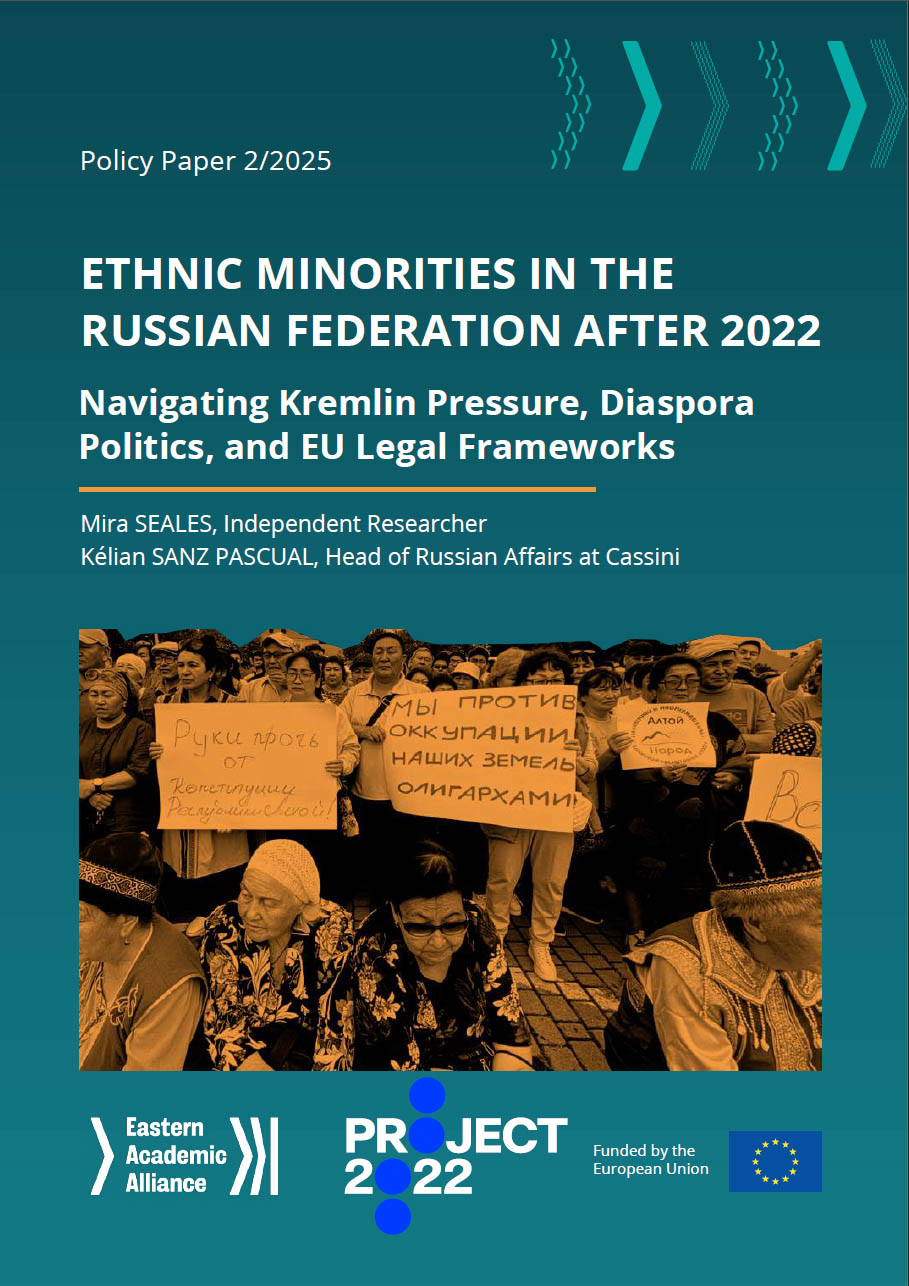
Yet this moment has also catalysed new forms of agency, particularly among diasporic and digitally connected activists. Emerging decolonial movements build upon, but also diverge from, earlier minority rights frameworks – interweaving demands for cultural preservation, environmental justice, gender equity, and sovereignty. Telegram channels, diasporic networks, and local protests – from Bashkortostan to Buryatia – have carved out spaces of resistance despite state repression.
For European states, engaging with these developments is not only a humanitarian imperative but a strategic opportunity to support anti-authoritarian and post-imperial futures. Such engagement must account for internal hierarchies within the Russianspeaking diaspora and remain attuned to the intersectional exclusions faced by non-Russian minorities – both within and beyond the borders of the Russian Federation.